
Pelleting
Single-Pellet
Process
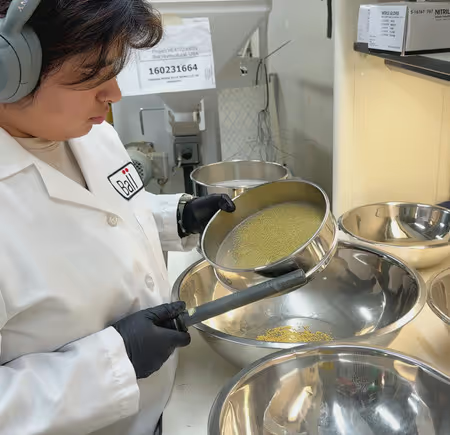
Pelleting is achieved by applying specially formulated layers of powders and binders to the seed to simplify handling. Small seeds are usually pelleted to a round, standard pellet size to reduce the number of setting changes required on an automatic sowing machine. With larger seed, the size of the pellet is often in relation to the size of the raw seed.
Pellet Color
The standard pellet color for Seed Technology Services is a vibrant yellow. This color is favorable due to its high visibility.
Pellet Size
For many of our smaller pelleted crops such as begonias and lisianthus, the average single-seed pellet size is 0.8mm-1.0mm +/- 0.1mm. For most seed, like petunia and torenia, the average single-seed pellet size is 1.0mm-1.25mm +/- 0.1mm. Larger seeds, such as alyssum, will have a larger pellet size.
Lead-Times
For most crops, our standard lead-time is ten (10) working days from the day the seed arrives until it is shipped to the customer. Lead-time will vary depending upon time of year and size of order.

Features
Increased size
More uniform shape
Easier handling
Water soluble
Benefits
Reduces empty cells and multiples
Increased labor savings
Increased visibility
Reduced sowing time
Common Crops for Pelleting
Angelonia – Begonia – Bellis – Campanula – Celosia – Coleus – Dianthus – Digitalis – Heuchera – Lisianthus – Lobelia – Matricaria
Pentas – Petunia – Torenia – Trachelium –Verbascum – Snapdragons
Multi-Pellet
Process
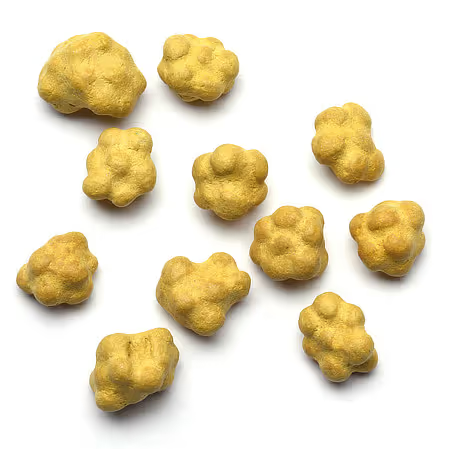
Multi-Pelleting is achieved by similar processes as single-seed pelleting, but each cluster contains more than one seed.
Pellet Color
The standard pellet color for Seed Technology Services is a vibrant yellow. This color was chosen due to its high visibility.
Lead-Times
For most crops, our standard lead-time is ten (10) working days from the day the seed arrives until it is shipped to the customer. Lead-time will vary depending upon time of year and size of order.
Features
Multiple seeds bound together in one cluster
Increased size
Water soluble
Benefits
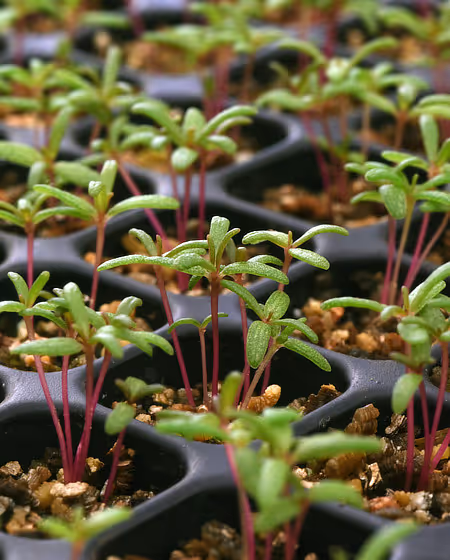
Increased germination due to multiple seed clusters
Dense cluster of seedlings
Similar handling as single-seed pellets
Common Crops for Multi-Pelleting
Alyssum Multi-Seed (7-9 seeds per pellet)
Bacopa Multi-Seed (4-5 seeds per pellet)
Begonia Multi-Seed (3-4 seeds per pellet)
Dichondra Multi-Seed (3-4 seeds per pellet)
Helichrysum Multi-Seed (3-4 seeds per pellet)
Lobelia Multi-Seed (6-9 seeds per pellet)
Ornamental Grasses Multi-Seed (5-9 seeds per pellet)
Ornamental Mint Multi-Seed (8-12 seeds per pellet)
Portulaca Multi-Seed (7-12 seeds per pellet)
