
Priming
What Is Priming?
Process
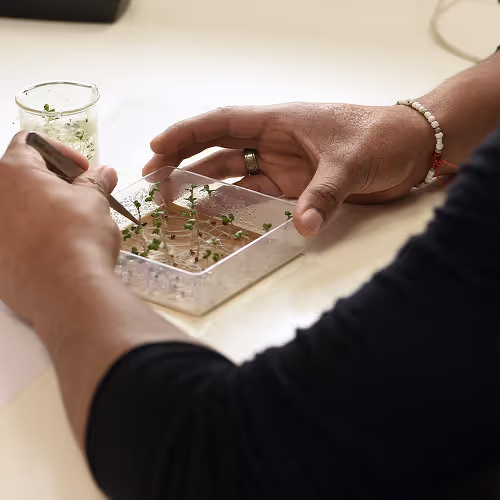
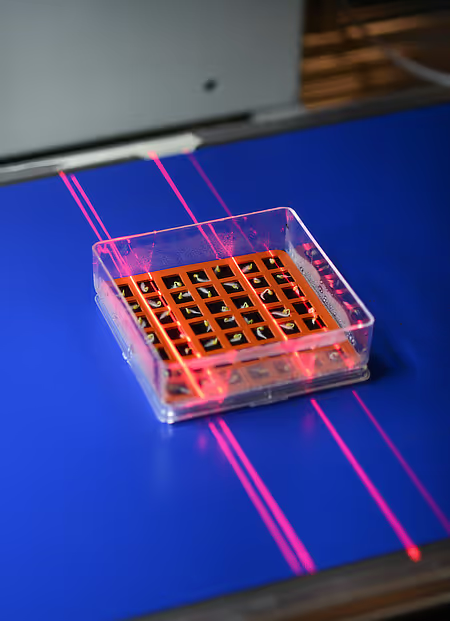
Priming is the biochemical process of initiating germination prior to sowing. The seed begins the germination process in the laboratory under ideal conditions. The seed remains in treatment long enough to bring treated seed to the same stage of germination. The treatment is halted prior to the emergence of the radicle from the seed, then the seed is returned to normal seed moisture. Primed seed germinates under a wider range of temperatures and delivers better uniformity.
Lot Screening
When lots are sent in for priming, our laboratory first processes a small quality control (QC) sample run. The seed from this priming sample run is tested to determine success of treating the batch. If the results are acceptable, the remainder of the lot is processed. This screening is standard and is performed at no extra charge to the customer.
Lead-Times
The lead-time for priming is between 7 to 9 weeks, depending on the crop. Sixty percent of this lead-time is devoted to the lot screening process.

Features
More uniform germination
Higher germination
Faster germination
Reduces thermal dormancy
Benefits
Higher stands
Increased profits
Quicker turnaround time
Similar handling as untreated seed
Common Crops for Priming
Coreopsis – Pansy – Papaver – Phlox – Rudbeckia – Verbena – Viola
